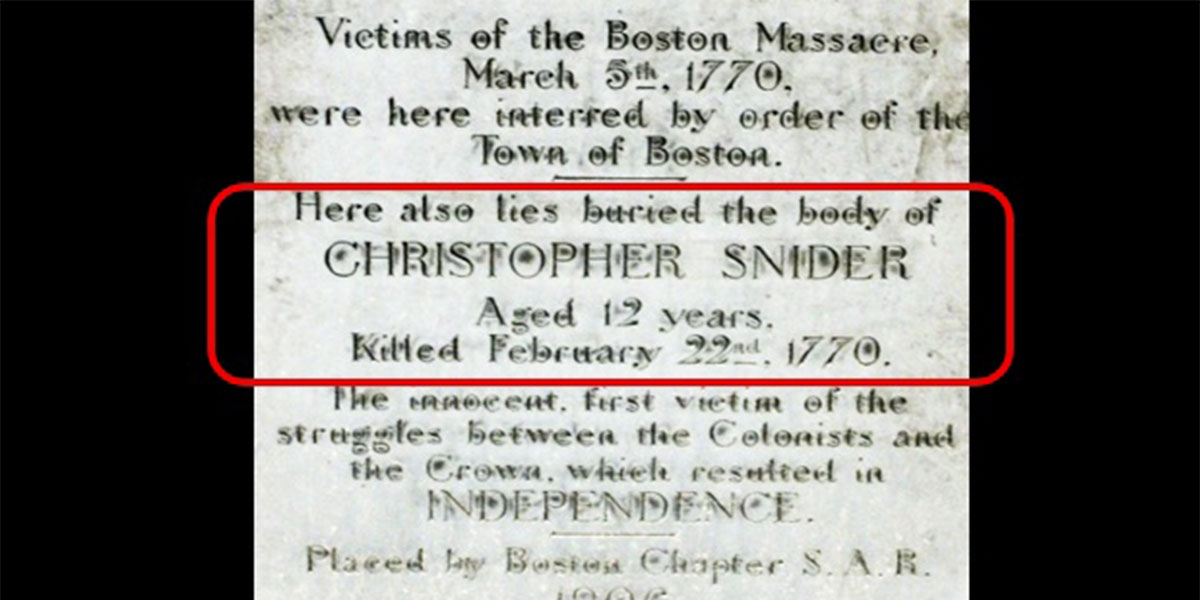
The first victim of the American Revolution was a 12-year-old boy who was shot. Also, a painter Samuel Gore was hit with a different bullet but survived, and became part of the revolution. Here is their story.
On Feb. 22, 1770, the city saw the killing of an 12-year-old boy outside Theophilus Lillie’s shop in the North End of Boston in the Massachusetts Bay Colony. British customs officer Ebenezer Richardson, determined to quell the crowd protesting outside the Loyalist’s shop, fired a musket through a broken window and mortally wounded young Christopher Seider in the arm and chest. Christopher, the son of poor German immigrants, died that evening and became known as the first colonist killed in the American Revolution. Swan shot from the musket also struck painter Samuel Gore in the thigh and hand during the same altercation, but he survived. Afterward, Gore carried the lead pellets dug out of him in his pockets. Two thousand angry colonists turned out for Christopher’s large public funeral, arranged by Samuel Adams. Although convicted of murder, Richardson claimed he acted in self-defense and received a royal pardon and another customs position, sparking anger among the American colonists. Tensions simmered in the city until erupting in early March during what became known as the Boston Massacre.